Feeding Your Dog Raw Food: Simple Recipe, How-To, and What to Ask For
“Feeding raw isn’t about chasing a trend, it’s about being intentional. Keep it simple, keep it clean, and choose ingredients that support a calm gut, steady energy, and a stronger bond with your dog.”
— Michael J. Soler, Blue Line K-9, Founder
Introduction:
Raw feeding can be a useful option for some dogs when it’s done thoughtfully and safely. The goal is to provide a balanced diet using fresh, minimally processed ingredients without creating nutritional gaps or increasing food-borne illness risk.
Feeding Your Dog Raw Food: Simple Recipe, How-To, and What to Ask For 💁♂️
What “raw feeding” usually means
Most raw diets fall into one of these categories:
Commercial complete raw: Pre-made, frozen or freeze-dried formulas labeled “complete and balanced.”
Homemade raw: You buy ingredients and build meals yourself (this requires more precision).
Hybrid: A complete commercial raw base, plus small fresh add-ons.
If you’re new, the safest starting point is a commercial complete-and-balanced raw while you learn.
Safety first (non - negoationalables)
Raw food can carry bacteria (Salmonella, E. coli, Listeria). Manage it like you would raw chicken for your family.
Keep raw food frozen until needed; thaw in the fridge.
Use a dedicated cutting board, wash hands/tools with hot soapy water.
Don’t leave raw food out longer than 15–20 minutes.
Store portions in sealed containers; clean bowls after every meal.
Extra caution for homes with kids, elderly, pregnant, or immunocompromised people.
Also, dogs with certain medical conditions may not be good candidates check with your vet.
A simple “starter” raw recipe (use as a short-term intro)
This is a basic starter to help you understand portions and prep. For long-term feeding, aim for a formula that’s “complete and balanced” or work with a veterinary nutritionist.
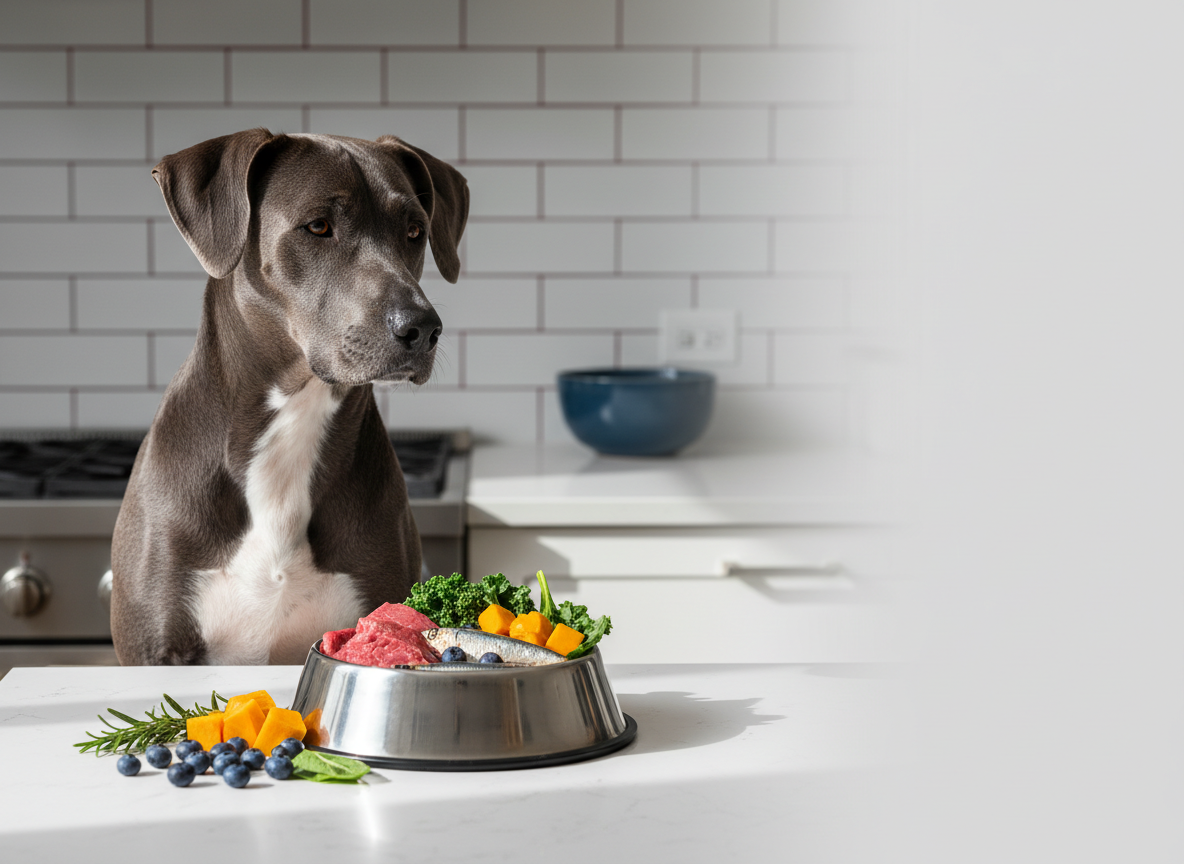
Easy starter bowl (one meal)
Lean ground turkey or beef: 6 oz (about 170 g)
Sardines in water (no salt added if possible): 1–2 tbsp (or 1 small sardine)
Pumpkin puree (plain): 1 tbsp
Finely chopped leafy greens (spinach/kale) or steamed then cooled: 1 tbsp
Optional: 1 tsp ground chia/flax (for fiber/omega support)
How to make it
Thaw meat in the fridge.
Mix ingredients in a clean bowl.
Serve immediately; refrigerate leftovers promptly.
Important note: This is not guaranteed to be nutritionally complete long-term because most homemade raw diets need a carefully planned calcium source and micronutrient balance. If you want homemade to be the main plan, use a complete premix or a professionally formulated recipe.
The “simple but smarter” way to do homemade raw
If you want homemade without doing complex math, use one of these approaches:
Complete-and-balanced premix: You add meat (and sometimes oil), the premix provides vitamins/minerals.
Commercial complete raw patties: Easiest and most consistent.
This reduces the risk of calcium/phosphorus imbalance and missing nutrients.
How much to feed (general starting point)
A common starting range is:
Adult dogs: 2–3% of ideal body weight per day
Very active dogs: 3–4%
Weight loss: closer to 2% (with vet guidance)
Example: a 50 lb dog might start around 1.0–1.5 lb/day, split into 2 meals.
Adjust every 1–2 weeks based on body condition, energy, stool quality, and weight.
Transition plan (keep it simple)
Some dogs switch fast; others need a slower ramp.
Days 1–3: 25% raw / 75% current food
Days 4–6: 50% raw / 50% current food
Days 7–9: 75% raw / 25% current food
Day 10+: 100% raw
If stools get loose, slow down and simplify ingredients.
What to look for in a good raw food (label checklist)
When shopping, prioritize products that say:
“Complete and balanced” (ideally with an AAFCO statement)
Species-appropriate protein listed clearly (chicken, beef, turkey, etc.)
Clear handling instructions (keep frozen, thaw safely)
Company transparency: sourcing, quality control, batch testing
Avoid diets that are all muscle meat with no plan for minerals/vitamins.
What to ask for at a pet store (bring this list)
Use these questions to quickly sort quality options:
Is this formula “complete and balanced” for my dog’s life stage?
Does it meet AAFCO nutrient profiles, or was it formulated by a veterinary nutritionist?
What’s the protein/fat percentage and calorie content? (helps with weight control)
How is it processed? (frozen raw vs freeze-dried vs gently cooked)
What are the food safety steps? (pathogen testing, sourcing, handling)
Do you have a single-protein option? (great for sensitive stomachs)
What’s the recommended feeding amount for my dog’s weight?
What’s the return policy if my dog won’t eat it or reacts poorly?
Common mistakes to avoid
Switching too fast and blaming “raw” instead of transition speed.
Feeding only muscle meat (nutrient imbalance).
Overdoing rich organs/fat early (GI upset).
Not tracking weight/body condition.
Poor sanitation in prep and storage.
How to find more information (reliable sources)
For safety and balanced nutrition, look for:
Board-certified veterinary nutritionists (DACVN in the U.S.)
Veterinary teaching hospitals and their nutrition resources
Peer-reviewed guidance on canine nutrition and food safety
Search terms that help:
“raw diet complete and balanced AAFCO dog”
“veterinary nutritionist homemade raw dog diet”
“safe handling raw pet food CDC”